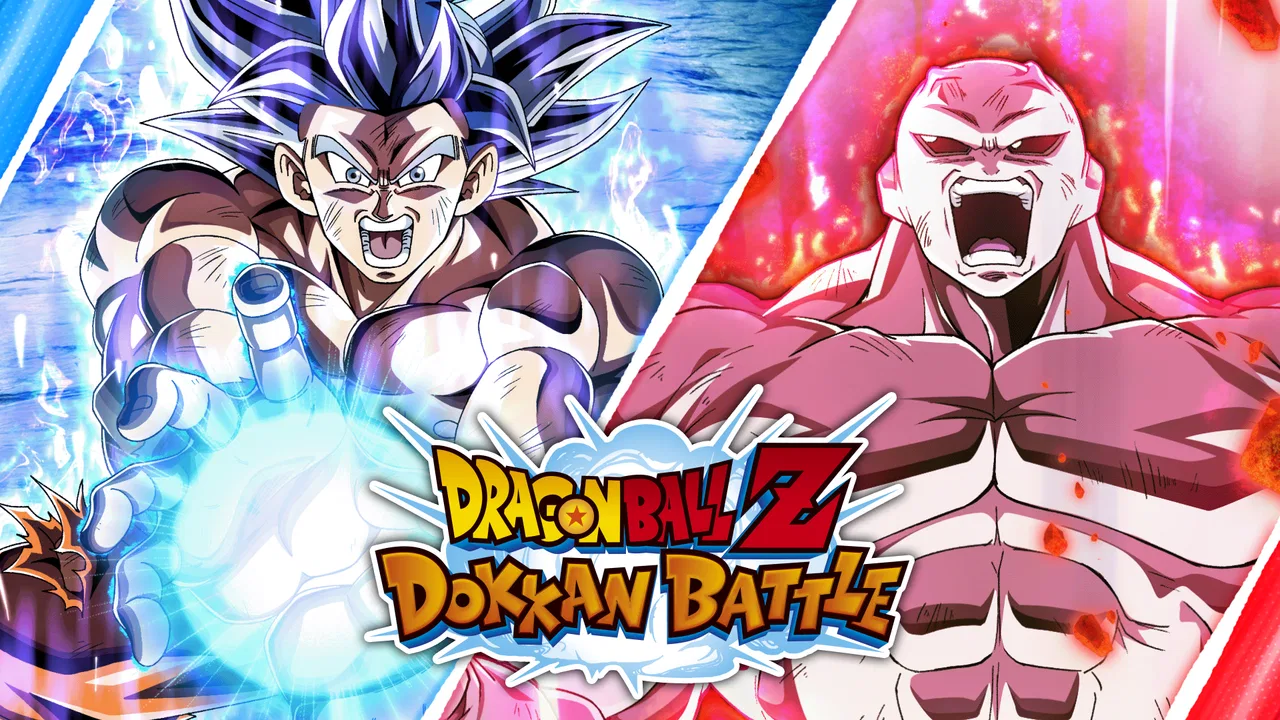
DRAGON BALL Z DOKKAN BATTLE
- 4.6
- Rating
- 50.00M
- Installs
- Free
- Price

 Analysis by App-foxy
I have spent enough time with DRAGON BALL Z DOKKAN BATTLE to understand why it remains such a familiar name among mobile action games. It combines Dragon Ball characters with quick, puzzle-like battles, collectible-team planning, and a steady stream of reasons to return. It is free to start, easy to test during a short break, and deep enough to occupy a long-term player who enjoys building teams around favorite heroes and villains.
My overall impression is positive, but it comes with an important qualification: this is not a simple action game where skill alone carries every fight. Progress depends on understanding team construction, event requirements, resource timing, and the limits of random character acquisition. I enjoy that strategic layer, yet I also think it can feel demanding if you want every new character immediately or prefer a completely predictable path through a game.
What the game feels like after the first sessions
The basic attraction is straightforward. You assemble a team from the Dragon Ball universe, enter battles, and connect matching colored spheres to build attacks. That simple interaction gives the combat a satisfying rhythm: I look at the board, decide which path will give a character the best attack, and try to arrange the turn so the right fighter receives the right resources. It is more thoughtful than tapping through ordinary menu battles, but it is still comfortable to play with one hand.
You May Also Like

 Blood Strike: 2.5 Anniversary
Blood Strike’s Loadouts Turn Every Drop Into a Tactical Gamble
A close look at Blood Strike’s custom loadouts: how fast access to signature weapons reshapes its battle royale rhythm, rewards preparation, and narrows the gap between fights.

 Pandora - Music & Podcasts
Pandora’s Music Is Easy to Start, but Harder to Recover
Pandora’s strength is its low-effort path from a seed to a station. Its weak spot is how much confidence it asks you to place in connection, setup, and quiet recovery.

 8 Ball Pool
 Is Built on Rivalries, Rematches, and Routine
A close look at the rivalries, rematches, shared routines, and unanswered safety questions that turn a quick pool match into a persistent mobile community.

 Samsung Music
’s Quiet Strength Is Playing What You Already Own
Its reach comes less from spectacle than from dependable access to a personal library. That simplicity is both the app’s strongest retention engine and its ceiling.

 AccuWeather: Weather Radar
AccuWeather Review: A Quick, Clear Forecast for Everyday Decisions
For everyday plans, the best forecast is the one you can understand quickly. AccuWeather makes rain timing, radar, and local conditions easy to act on, with a few trade-offs.

 Hill Climb Racing
Why Hill Climb Racing Still Turns Crashes Into One More Run
A tiny car, a bumpy hill and one more upgrade: Hill Climb Racing keeps resurfacing because its simple chaos makes every near-miss feel personal.
More From Our News Desk



The action label is accurate in spirit, although the game is not a reflex-heavy fighter. There are no complicated touch-combo inputs to master. Instead, the tension comes from choosing an attack route, managing turn order, protecting vulnerable characters, and deciding whether to spend a powerful ability now or save it for a more dangerous phase. That makes it a good fit for someone who wants Dragon Ball battles without needing the concentration required by a traditional real-time fighting game.
The first few encounters are approachable, but the larger experience quickly becomes a team-building game. Characters are not valuable only because they are individually strong. Their categories, links, abilities, and compatibility with the rest of the squad matter just as much. I found that a favorite character can be less useful in the wrong team than a less exciting unit that completes a better combination. That is one of the first lessons worth learning before spending resources or judging a character too quickly.
Bandai Namco Entertainment Inc. has built the game around a large Dragon Ball roster, and that is both its strongest identity and its biggest source of complexity. Fans can enjoy familiar transformations and story moments, while newer players may need time to understand why several versions of the same character behave differently. The game rewards curiosity, but it does not always explain every strategic distinction in a way that feels immediately clear.
A practical way to approach team building
My advice is to stop treating the character list like a collection of isolated prizes. When I review a new unit, I first ask where it fits: which category can use it, which leaders support it, whether its links match the team, and whether its role is damage, defense, support, or a mixture. This prevents a common mistake in collectible games—using the newest-looking character simply because the artwork is impressive.
A useful everyday workflow is to create one dependable team for ordinary events and a separate group of teams for special restrictions. The reliable team is the one I use when I want to clear routine content without spending much thought. The specialized teams are for missions that demand particular categories or mechanics. This separation saves time and reduces the temptation to dismantle a functioning squad whenever a new character arrives.
Another non-obvious tip is to inspect the battle board before choosing the first attack rather than tapping the most obvious chain immediately. A longer chain is not always the best choice if it leaves the next character with poor resources or breaks a useful route for the following turn. I get better results by considering the whole rotation: who attacks first, who needs defense, and which character benefits most from the available spheres.
The game is free to download and play, but purchases are part of the experience. Individual in-app items range from $0.99 to $69.99, so the financial gap between a casual player and a heavy spender can become substantial. That does not automatically make the game unfair, but it does mean I would treat the purchase screen as a convenience option rather than a normal requirement. A player should decide on a personal limit before the excitement of a new summon makes that decision for them.
Where progress starts to create pressure
Early progress feels generous because new players have many things to unlock, missions to complete, and teams to improve. That initial momentum can create the impression that every obstacle will disappear with a little more play. Later, the game asks for more deliberate preparation. A character may need specific awakening materials, a team may require a particular category, and a difficult event can expose weaknesses that were invisible in ordinary stages.
I like this transition when I am in the mood to plan. It gives the roster a purpose and makes old characters or overlooked materials more relevant. However, it can be frustrating when I only want to use a favorite lineup and discover that the event is designed around a different combination. The game is at its best for players who enjoy adapting rather than insisting on one permanent team.
Progress also has a collection-pressure side. Dragon Ball fans naturally want the newest transformation, the strongest version of a major character, or a unit connected to a memorable scene. Because acquisition is tied to random draws, desire and availability do not always line up. I would not advise anyone to start with the expectation of collecting everything. A healthier goal is to build a few capable teams and treat additional characters as welcome improvements rather than necessities.
For an ordinary scenario, imagine having fifteen minutes on a commute or during a lunch break. The game works well there: I can complete a short battle, use stamina, check a mission, and stop without needing a long uninterrupted session. The problem appears when a player begins an event without enough preparation and then feels pushed to repeat stages, wait for resources, or spend to accelerate progress. The short-session format is convenient, but the long-term progression can still encourage more time or money than planned.
The current version is 5.33.5, and the game has been available since July 15, 2015. That long lifespan explains why the amount of accumulated content can feel overwhelming. A new player is not entering a small, neatly ordered campaign; they are stepping into a mature service game with years of systems and characters behind it. I recommend learning one mechanic at a time instead of trying to understand the entire roster on the first day.
Fairness: what I can judge and what I cannot
From a fairness perspective, the clearest fact is the purchase range, not a promise that spending is always necessary or always sufficient. The game offers paid items, and the highest listed individual price is $69.99. That makes budgeting important, especially for players who are sensitive to random-reward systems or who find it difficult to stop after an unsuccessful attempt.
I do not see the game as a conventional competitive fighter where two people bring equal skill into a live match and one wins directly. Its central challenge is building and using a roster for battles and events. That changes the meaning of fairness. The relevant question is less “can a paying player defeat me in real time?” and more “how much advantage does access to more summons, resources, or developed characters create in the content I want to play?”
For me, the game is most comfortable when I judge success by clearing content with a team I understand, not by comparing my collection with another player’s account. A player who wants a strict, skill-only contest may be happier with a traditional competitive action game. A player who enjoys optimizing a roster can accept that collection strength is part of the design, provided spending remains controlled.
There is also a fairness issue in time. Even without paying, a player may need to repeat activities, wait for resources, or learn event-specific requirements. That is not the same as a direct cash barrier, but it still affects the experience. I would call the free route viable for patient players, while also warning that patience is an active part of the cost. If you dislike repeating content for materials, the game may feel more tiring than rewarding.
My practical rule is simple: never spend to repair a team-building mistake. Before using valuable summon resources, check whether the character actually fits a team you can build, whether you need that role, and whether the event you care about supports it. This small pause is more useful than chasing every banner emotionally. It also keeps the game focused on planning rather than impulse.
The unknowns a careful player should keep in mind
The public-facing facts tell me that the game is free, has optional purchases, and is rated Teen. They do not turn the purchase system into a guaranteed path to a specific character, so I would approach every random acquisition with restraint. I would also avoid assuming that a high-profile character automatically solves difficult content. In this game, compatibility and investment can matter as much as fame.
The Teen rating is worth considering for families. Dragon Ball combat and dramatic battles are central to the presentation, and the rating makes it unsuitable to describe as a purely child-focused game. Parents should decide whether the action, collection pressure, and purchase options fit the player using the device. I would not hand it to a young child without discussing spending boundaries first.
The game requires Android 7.0 or later, which makes the compatibility threshold fairly accessible for many Android users. Still, compatibility is not the same as comfort. A player should leave enough storage and battery for a large, content-rich game, and older hardware may provide a less pleasant experience than a newer phone. I would test it on the intended device before investing serious time or money.
There is also a difference between “free to start” and “free of pressure.” The download price is free, but the presence of items priced from $0.99 to $69.99 means the experience should be treated like a hobby with optional spending, not like a one-time purchase. I recommend using device-level purchase controls where appropriate and deciding in advance whether your budget is zero, occasional, or fixed monthly spending.
The game’s popularity is substantial: it has passed 50 million installs, with an average rating of 4.6 from around 1.3 million ratings and roughly 131 thousand written reviews. Those figures explain why finding community advice is easy, but popularity should not replace personal judgment. A huge audience can confirm that the core appeal is real while saying little about whether its collection mechanics suit your habits.
Who should play, and who should choose something else
I recommend it to Dragon Ball fans who enjoy collecting, experimenting with team combinations, and gradually improving a roster. It is especially suitable for players who like turn planning but do not want a real-time fighting game. The board interaction is simple enough to learn, while the character relationships and event restrictions create enough depth for long-term play.
I would also recommend it to someone who wants a game that can be checked in short bursts. A quick battle or team adjustment can fit into a spare moment, and there is satisfaction in seeing a previously weak squad become reliable after better planning. The strongest long-term motivation, in my experience, comes from building a team around a theme or strategy rather than chasing a complete collection.
I would tell a friend to skip it if they dislike random acquisition, repeated resource farming, or games where older progress can feel less useful when the roster expands. It is also a poor choice for anyone seeking a pure arcade fighter with direct controls and immediate competitive feedback. In that case, a conventional fighting game is a better match because it places more emphasis on execution than on collection and preparation.
It may not suit players who want a fully linear story with a clear ending. The large amount of content and ongoing team development make it feel more like a continuing hobby than a campaign to finish once. That structure is a strength for committed fans, but it can feel directionless if you need a simple beginning, middle, and conclusion.
My trust verdict after weighing the trade-offs
My final view is that DRAGON BALL Z DOKKAN BATTLE is a strong mobile Dragon Ball game when approached as a strategic collection experience rather than a quick fighting substitute. The combat is accessible, the roster gives team building real purpose, and the short-session format makes it easy to return to. I especially appreciate that thoughtful board choices and team compatibility can make a bigger difference than simply owning a famous character.
My trust comes with boundaries. I would play it for free first, learn the systems, and decide whether the daily rhythm is enjoyable before buying anything. If I did spend, I would set a firm limit and treat purchases as optional support for a hobby, never as a solution to frustration. The listed purchase range makes that discipline important.
For me, the best way to enjoy the game is to choose a small number of goals: finish a particular team, learn a difficult event, or strengthen a favorite category. That approach turns the huge roster into something manageable. It also protects the fun from becoming a race for every new release.
In short, I recommend it to patient Dragon Ball fans who like planning, collecting, and gradual progress. I would steer competitive purists, completionists on a strict budget, and players who dislike repetition toward another kind of action game. For the right audience, this is a rewarding long-term mobile game; for everyone else, its purchase pressure and layered progression can become more work than play.
FAQs for DRAGON BALL Z DOKKAN BATTLE
01What is DRAGON BALL Z DOKKAN BATTLE?
DRAGON BALL Z DOKKAN BATTLE is a popular mobile game that combines elements of puzzle, board, and card games. Players collect characters from the Dragon Ball universe, form teams, and engage in battles using a unique match-3 puzzle system. It’s available on both Android and iOS platforms, offering an engaging experience for fans of the series.
02Is DRAGON BALL Z DOKKAN BATTLE free to play?
Yes, DRAGON BALL Z DOKKAN BATTLE is free to download and play. However, it includes in-app purchases that allow players to buy items like Dragon Stones, which can be used to summon new characters or refill stamina. While you can progress without spending money, these purchases can enhance your gameplay experience.
03What are the system requirements for DRAGON BALL Z DOKKAN BATTLE?
For Android devices, DRAGON BALL Z DOKKAN BATTLE requires Android 4.4 or later, while iOS devices need iOS 10.0 or later. Adequate storage space is necessary due to frequent updates and added content. For optimal performance, a stable internet connection is also recommended as the game frequently accesses online features.
04Can I play DRAGON BALL Z DOKKAN BATTLE offline?
No, DRAGON BALL Z DOKKAN BATTLE requires a constant internet connection to play. This is because the game frequently updates with new events and content, and requires online connectivity for saving progress and accessing multiplayer features. Make sure to have a reliable internet connection before playing.
05How does the character summoning system work in DRAGON BALL Z DOKKAN BATTLE?
The character summoning system uses Dragon Stones, which can be earned in-game or purchased. Players can spend these stones to summon new characters through various banners, which are special events offering different characters and rates. Strategic planning is key to maximizing your chances of summoning powerful characters and building a strong team.
Pros
- Engaging combat system with strategic depth.
- Stunning graphics true to the anime style.
- Frequent updates and new content.
- Diverse character roster to collect.
- User-friendly interface for easy navigation.
Cons
- Heavy reliance on in-app purchases.
- Repetitive gameplay can become monotonous.
- Requires constant internet connection.
- Large file size may strain device storage.
- Limited interaction with other players.

DRAGON BALL Z DOKKAN BATTLE
Gallery